
Diego Demme on Leipzig Success, Napoli Scudetto and Saying Goodbye to Football
It has been three years since Napoli won the Scudetto, ending a 33-year wait for the biggest prize in Italian football. Some of those champions, such as Stanislav Lobotka and Amir Rrahmani, are still going strong with Napoli today. Some, such as Khvicha Kvaratskhelia, have won the UEFA Champions League, while others such as Giacomo Raspadori and Piotr Zieliński are playing for Napoli’s domestic rivals. Only one, however, has officially retired from football: Diego Demme.
Born in Herford, Germany, on Nov. 21, 1991, Demme is the son of a German mother and an Italian father. His mother wanted to name him Fabio, but his father, a Napoli fan who emigrated from Calabria in the 1970s, successfully pushed for him to be named Diego in honor of his footballing idol. At the time, Diego Maradona had already played his last game for Napoli and was serving a 15-month ban for testing positive for cocaine, but he was still the legend who had steered them to their first and second championships in 1987 and 1990 and their first European trophy with the 1989 UEFA Cup.
Demme started playing for various youth teams such as SpVg Hiddenhausen, SV Sundern, SV Enger-Westerenger and JSG Kirchlengern Stift Quernheim before joining Arminia Bielefeld. It was here, at the Bielefelder Alm, that Demme signed his first professional contract before eventually making his senior debut on Dec. 4, 2010. Despite losing 4-1 to Greuther Fürth, Demme did well enough to earn the praise of local outlet Neue Westfälische and land himself an extended run in the starting XI. He would make 10 appearances across the 2010-11 season, which culminated in relegation to the German third tier, before playing 13 times the following year.
“I had the dream of becoming a professional footballer, but it wasn’t until I was 19 that I made my debut in the second division. It came fast: I thought I was a good player in Arminia’s second tier, but I wasn’t expecting what would come next,” said Demme in an exclusive R.org interview. “Our manager [Christian Ziege] was dismissed, and there was a new head coach [Ewald Lienen] who came to training on Thursday and watched the second team training. After the training session, he told me, ‘Tomorrow, you train with the first team.’ After training with the first team, he told me that I’d be playing the next day. Those were two days that changed my whole career because he gave me the opportunity to play my first match in the second division, and I had the feeling that I could play professional football, that I had the quality and the mentality to play in the second division. This week changed my whole career.”
He departed Arminia in January 2012, joining second-tier SC Paderborn 07 for €25,000. Initially a jack-of-all-trades who filled in across the fullback positions and midfield, Demme locked down a starting spot in the center of the pitch and made 61 appearances across all competitions. However, just as Paderborn were closing in on their first-ever promotion to the Bundesliga, Demme elected to drop down a level to the German third tier. He left North Rhine-Westphalia for the first time in his life and made the move east to Saxony, joining RB Leipzig for €350,000.
Demme immediately justified that outlay, emerging as an ever-present in the center of the pitch and leading Leipzig to two promotions in three years.
“I think what made me go to Leipzig was my conversation with [then sporting director Ralf] Rangnick. It was the winter, and I was in the airport, having this 30-minute conversation with Rangnick, and he told me about RB Leipzig’s project and convinced me very fast. He told me that we’d be playing in the UEFA Champions League in four years. I said, ‘Okay, I’d be happy when I finally play in a first division, but I never expected that we’d be playing in the Champions League after four years.’ Sometimes you have to go one step backward to take two forward, and that was the case with Leipzig: we had a strong team, and the project was very good.”
It didn’t take long for Rangnick’s premonition to come true. Demme excelled in Leipzig’s first-ever Bundesliga season in 2016-17, with Ralph Hasenhüttl’s side cruising to the top of the table before eventually finishing second. No matter what, Demme showcased a willingness to get stuck in and leave his body on the line for Leipzig, even if it meant losing a tooth, as was the case after a clash with Freiburg’s Nicolas Höfler in April 2017. It’s precisely this fearlessness and positional acuity that saw him captain Leipzig on several occasions, and it also earned him an international call-up. Two months after joking that he’d represent Germany or Italy depending on which team called him first, Demme debuted for Germany in a World Cup qualifier vs. San Marino. Little did he know, that would be his first and last cap, with Demme being forced to pull out of the squad for the 2017 Confederations Cup because of a back injury.
“I feel a bit unlucky to have gotten injured and not have a second chance to represent Germany, but I’m happy I played at least one game; that was very nice. It was crazy to be able to hear the German national anthem and represent my country … it was an unbelievable sensation.”
Demme scored two goals and 17 assists in 214 appearances for Die Roten Bullen, helping them finish second, sixth and third (twice), reach the 2019 DFB-Pokal final and pave the way for a team that has solidified itself in the Bundesliga’s upper echelon over the past decade. However, just as Leipzig were in the midst of a historic run to the UEFA Champions League semifinal, Demme decided to leave for Napoli. It was a decision that came from his heart rather than his brain: Napoli had suffered a torrid start to the season under Carlo Ancelotti and were en route to a seventh-place finish. They replaced him with Gennaro Gattuso, the man whom Demme idolized and even modeled his game after. It’s why, when Napoli offered to sign him on a 4.5-year contract, he simply couldn’t refuse.
“I came back from my holidays on Jan. 3, 2020, and my agent called me and said, ‘Napoli is interested in you.’ I said, ‘Okay, we can talk about a summer transfer,’ and he said, ‘No, it’s for the winter,’ and I was like, ‘Ufff.’ I felt very good in Leipzig; I was captain and felt very good in the city. But I always dreamed of going to Italy one day, and Napoli was special to me since my father named me Diego after Maradona. I said, ‘Okay, let’s do it.’ The story was good, but I was still very sad to leave Leipzig. Before and after, Napoli is like a second home for me since my two kids were born there … maybe even a first home.”
It wasn’t an easy start to life for Demme, who had to deal with the COVID-19 pandemic in a foreign country while raising a newborn daughter, but he nevertheless adjusted well and proved incredible value for Napoli’s €12 million investment. Demme returned from the enforced COVID pause by edging Inter to a spot in the Coppa Italia final before beating Juventus on penalties to secure their first trophy since 2014. After a challenging 2020-21 season that was made all the more difficult by Maradona’s untimely demise, Luciano Spalletti took charge and guided the Partenopei to a third-place finish in 2021-22.
Napoli finally reached the mountaintop in 2022-23, finishing 16 points clear atop Serie A and winning their third Scudetto. However, they failed to build on that momentum and delivered a title defense that will live on in infamy, finishing 10th in the table after a summer that saw them lose key players such as Kim Min-jae as well as their manager, Spalletti. Yet the one departure that proved most debilitating was Victor Osimhen to Galatasaray.
“I think Osimhen is very happy in Galatasaray because he likes the fans and they like him, but I still want to see him play for one of the biggest clubs in Europe in a league like La Liga or the Premier League. I think he has to do it, because he’s a really good striker, and he’d have more visibility than he currently has in Turkey.”
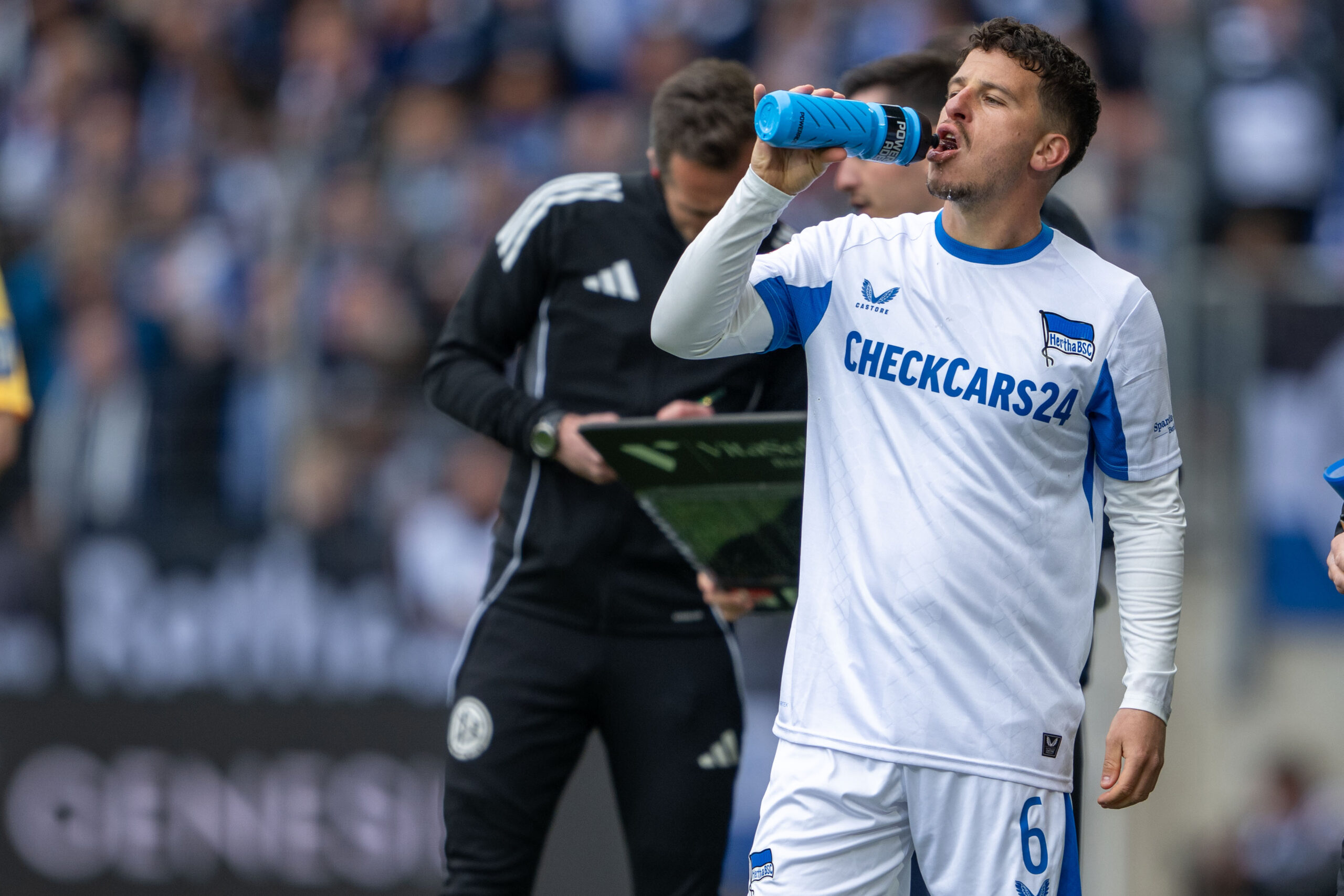
Demme ended his Italian adventure in the summer of 2024 with five goals and five assists in 92 appearances, and returned to Germany. He penned a two-year deal with Hertha Berlin, where he made 39 appearances, helping Die Alte Dame finish 11th and then seventh in the 2. Bundesliga, but ultimately falling short of the promotion playoffs. However, after an injury-plagued 2025-26 season that saw him suffer two head injuries, Demme elected to retire from professional football on Sept. 24. He does so with the poise and fulfillment of a man who worked his way up from the German lower leagues to the UEFA Champions League, and who ushered in a new era of success at Red Bull Arena and the Stadio Diego Armando Maradona.
“Eventually, the moment comes when you have to say goodbye to something that has been with you for almost your entire life, and now, that moment has arrived for me,” said Demme on his Instagram. “As a young boy, I dreamed of playing in big stadiums one day. I simply wanted to play football — and eventually, I actually got to live that dream. There were big matches and great successes, but naturally also defeats, setbacks and difficult moments that shaped me and made me the person I am today.
“As I write these lines — feeling a bit sad — and look back on my career, I realize it was a beautiful football story that the little boy inside me got to experience. Football was so much more than just my profession. It was my life, my passion, my everyday reality — and it gave me so many incredible people and moments. I will always love that round ball. Thank you to everyone who accompanied me along the way: my family, friends, teammates, coaches, clubs and everyone who was part of this journey. And a very special thank you goes to Alex Sekora, who kept me fit for almost my entire career and stood by my side through countless highs and lows.”