
“It’s Still Hard To Process”: Bergeron On HHOF Induction, Bond With Chara, And Unique Perspective On Price
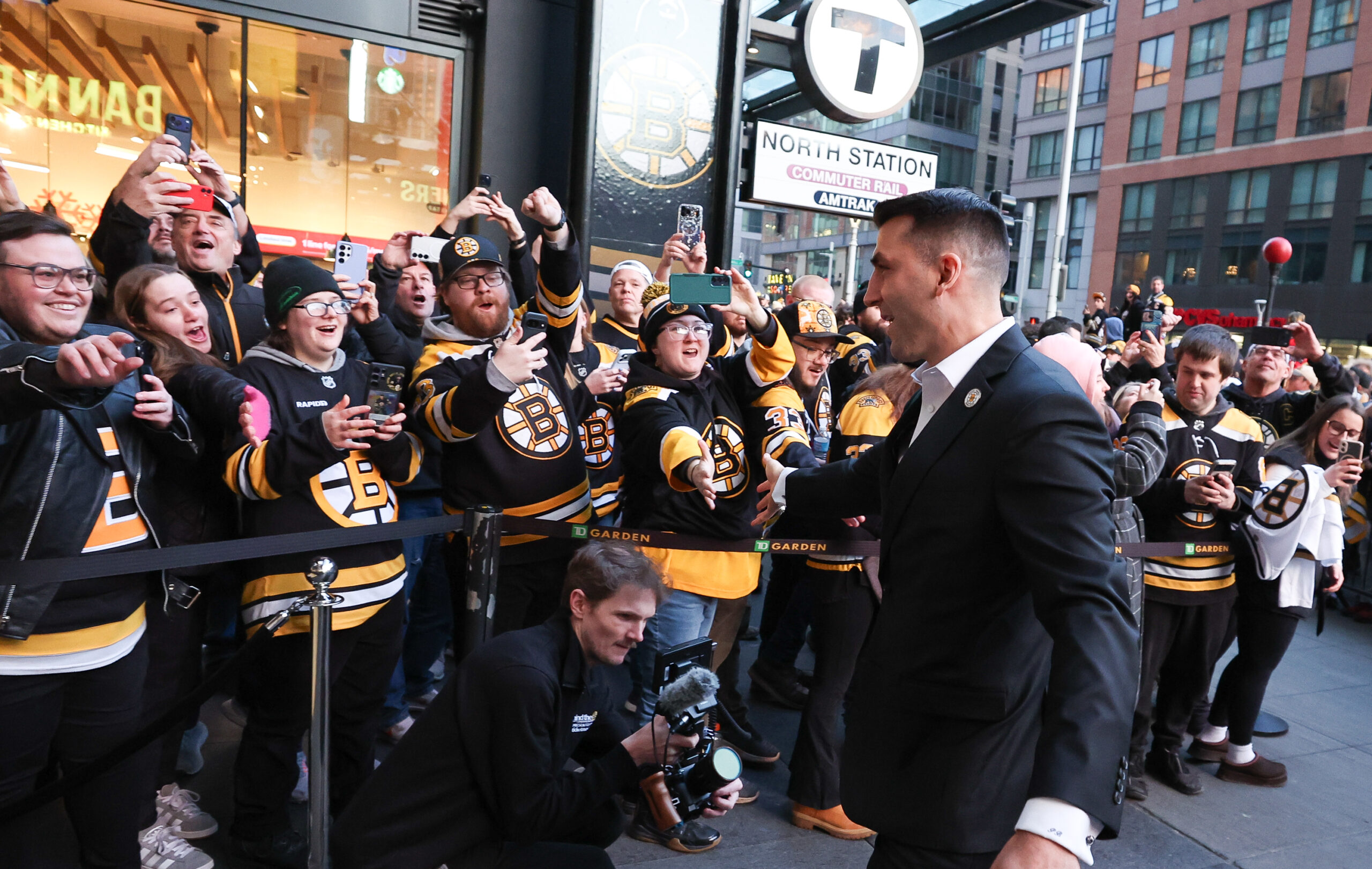
Patrice Bergeron will enter the Hockey Hall of Fame with a résumé that leaves little room for debate.
Across 19 NHL seasons, all with the Boston Bruins, he played 1,294 regular-season games, recorded 427 goals and 1,040 points, wore the captain’s C and helped lead the franchise to the 2011 Stanley Cup, scoring the Cup-winning goal. He was also part of two more trips to the Stanley Cup Final and helped Boston finish atop the NHL standings in three Presidents’ Trophy seasons.
His individual record is just as imposing. Bergeron won a record six Frank J. Selke Trophies, was a Selke finalist in 12 consecutive seasons, appeared in three NHL All-Star Games and earned the King Clancy Memorial Trophy, the NHL Foundation Player Award and the Mark Messier NHL Leadership Award. Internationally, he won World Championship gold, two Olympic gold medals, World Junior gold and MVP honours, a World Cup of Hockey title and a Spengler Cup, becoming a member of the Triple Gold Club along the way.
Yet, as Bergeron prepares for hockey’s ultimate recognition, the moment has led him less toward a celebration of his own accomplishments than toward gratitude for the people who made them possible.
“It’s an incredible honour,” Bergeron said. “It really warms my heart. To be considered amongst the best in history is not something to be taken lightly.”
The reality of the moment has not entirely settled in. Bergeron knows the date is approaching, and he knows what it means to be recognized alongside the players whose names helped define the sport.
“As the date gets closer, it is still a little hard to process,” Bergeron said. “I think I’ll realize it when I’m there, or after I receive the plaque that will commemorate the moment.”
For Bergeron, that moment will offer something rare. It will force a player whose career was built around the next shift, the next faceoff and the next detail to pause long enough to consider the full body of work.
“It allows me to take a step back and look at everything as a whole,” Bergeron said. “It makes me realize how fortunate I was to play, to be part of so many great teams and to be surrounded by people who helped me along the way.”
That gratitude runs through every part of Bergeron’s reflection. He doesn’t frame his career as an individual climb. He sees the teammates, family members, coaches, friends and organizations who shaped him, challenged him and supported him through every stage.
“I’m very grateful for all the people who helped me and influenced me in my career,” he said.
Learning From Zdeno Chara
Bergeron had a glimpse of what a Hockey Hall of Fame induction can mean last November when he watched former Bruins captain Zdeno Chara receive his own honour.
Their relationship in Boston spanned 14 years, beginning when Bergeron was still a young player finding his place in the NHL. Chara arrived with an established reputation as a dominant defenceman and leader. What developed was a partnership that helped define one of the most successful eras in Bruins history.
Bergeron was 21 when Chara joined the Bruins. He learned from him not just by watching the way Chara played, but through the standard he established every day.
“I learned so much from him, from his work ethic but also from his leadership. When he came to Boston, I was still very young, and we kind of turned things around together. He was the kind of leader that could will you to victories, and he did just that,” Bergeron said.
Chara’s influence did not come from one speech or one defining gesture. It came through the daily commitment, the discipline and the way he approached the responsibility of being the captain in Boston. Bergeron saw those things firsthand, first as a younger teammate and eventually as someone trusted to help carry the culture Chara had helped build.
“It started a little bit as a mentor relationship. Then, as we as people and the team evolved, we became very good friends,” Bergeron said. “It was a really nice evolution. He was a big influence for me in my career and I’m really glad to call him my friend today.”
Being in the room for Chara’s induction made the occasion personal. Bergeron had watched his former captain earn the admiration of teammates, opponents and fans over the course of a long career. Seeing him receive the sport’s highest individual honour was a chance to recognize that journey from close range.
“It was really special,” Bergeron said. “I was very happy to be able to be there, to see him receive what he deserved and to be present for that tribute.”
Soon, Bergeron will experience the same moment from the other side of the stage.
The Carey Price Battles
Carey Price will be inducted alongside Bergeron, an especially fitting wrinkle considering the number of meaningful games the two spent on opposite sides of the Canadiens-Bruins rivalry.
For Bergeron, facing Price meant understanding that the Bruins could not afford to waste the few chances they created. Price had the ability to turn a game into a test of patience. A team could generate pressure, pile up shots and still find itself searching for a way to beat a goaltender who seemed to be in control of every situation.
“When we played against him, we knew we had to capitalize on the chances we had because we would not get many opportunities to score,” Bergeron said. “He was the kind of goaltender that could take over games, and it forced us to elevate our games.”
Bergeron recounted how Price would frustrate the opposition with his calm demeanour and control of the game, often keeping his team in tight games — despite the Bruins’ best efforts.
“I remember a lot of games where we would put up 30 or 40 shots, and the score would be 2-1 or 3-1,” Bergeron said. “They were always tight games because he would rise to the occasion. That’s the sign of a great player.”
Bergeron described a goaltender who did not need to rely on unnecessary movement or desperation to make difficult saves. His presence was calm, his positioning was precise and his ability to read the next play made him exceptionally difficult to solve.
“I always appreciated his poise,” Bergeron said. “He made it look easy. He never seemed to be throwing himself all over the place or overcommitting on plays. He was always in position. His technique was flawless.”
But Bergeron also got to experience the benefits of having Price as a teammate, albeit on the international stage. The two became teammates with Team Canada, and the frustration of trying to score on him was replaced by the confidence of knowing he was behind them.
Price’s anticipation stood out to Bergeron. If a shooter appeared ready to release the puck but elected to pass, Price had the ability to recover and still be in control. That calm extended to the rest of the group.
“He was always able to get back into position,” Bergeron said. “He was always in complete control of the moment and he anticipated the play so well.”
With Price in net, Team Canada’s skaters could play aggressively knowing they had one of the world’s best goaltenders as their safety net.
“For us with Team Canada, it gave us confidence,” Bergeron said. “Even if there was a mistake among the five players on the ice, we knew the sixth guy was going to do the job and take care of us.”
That confidence was absent when Price was wearing Canadiens colours.
“Playing against him was the opposite,” Bergeron said. “We knew we had to capitalize as much as possible because he was not going to give us much.”
A Stanley Cup, And Much More
Asked to identify the defining memory of his career, Bergeron does not hesitate for long.
The 2011 Stanley Cup remains the childhood dream realized, an achievement that became even more meaningful because of the people with whom he shared it. Bergeron had spent years chasing that moment with the Bruins. When it came, it belonged not only to the players in the room, but to their families, the city and the supporters who had carried the team through the journey.
“The 2011 Stanley Cup is a childhood dream,” Bergeron said. “To have shared it with my family, with my teammates and with the city, that was incredibly special.”
But the celebration that followed is the image that has remained with him most vividly. Bergeron remembers the parade through Boston, the people lining the route and the feeling that the moment had become larger than anything the players could have anticipated.
“The parade in the duck boats is probably the moment that felt a little unreal,” he said. “The reaction all along the route, the number of people and that sea of people, it was really impressive. It is something I will never forget.”
There are trophies and championships in Bergeron’s story. There are individual accolades that reflect the exceptional standard he set at both ends of the ice.
But when he looks back on the full journey, he also returns to the friendships hockey gave him. Many of the relationships he formed during his playing days remain central to his life now.
“Hockey gave me a lot,” Bergeron said. “I still have many very, very good friends that I would not have had without hockey. I am very grateful for that.”
The Message For Young Players
For young players looking at Bergeron’s career and dreaming of following a similar path, his advice is not to race ahead toward the NHL.
Young athletes want the next level, the next opportunity, the next sign that the dream is becoming real. But he believes some of the most valuable experiences in hockey happen well before a player reaches a professional locker room.
“For me, it comes back to living in the present moment and enjoying every second,” Bergeron said.
His best memories of hockey are not limited to wins or statistics. There are the tournaments, the bus rides and the friendships that have endured long after those early teams broke apart. Hockey, he said, can teach values that extend far beyond the rink.
“My best memories from minor hockey were tournaments,” Bergeron said. “I still have friends from childhood, friends from peewee, bantam and midget. You create friendships, but you also learn values through hockey that will serve you in everyday life.”
Bergeron hopes every young player reaches the highest level they dream of reaching. But he believes the process has to matter as much as the destination. The work, preparation, resilience and leadership learned along the way are not merely tools for becoming a better player. They are lessons that help shape a person.
“I hope you make it and live your dream,” Bergeron said. “But being in the present, the preparation, the work, the values of perseverance, resilience and leadership that you can learn in those years are essential, not only as a player, but as a person.”
There is no need to rush the journey, he said. Hockey moves quickly enough on its own.
“Give yourself 100 per cent because you do not get those years back,” Bergeron said. “Sometimes you want to go fast, become a young adult and move on to the next thing, but take the time to learn. Take the time to work on what you need to work on, and you will see that it will take you where you want to go.”
The Hall of Fame will preserve the numbers, the trophies and the championships. But Bergeron’s place in the game has always been about more than the record of what he won, whether as a key member of a championship team or individually. It’s found in the standard he set each day, the respect he earned from teammates and opponents, and the way he made those around him feel accountable to something bigger than themselves.
When he takes the stage in Toronto, it will be a celebration of a career that reached every height hockey can offer. For Bergeron, though, it will also be a chance to recognize the people, friendships and moments that gave those achievements their meaning. That may be the most fitting way to understand the honour: not as an ending, but as a reflection of everything he left behind in the game.
It is a sporting legacy that an entire generation of hockey fans will look back on with pride.