
“It’s a Tough Situation, but We Must Not Give Up”: Thomas Hitzlsperger Backing Aalborg to Bounce Back to Danish Top-flight
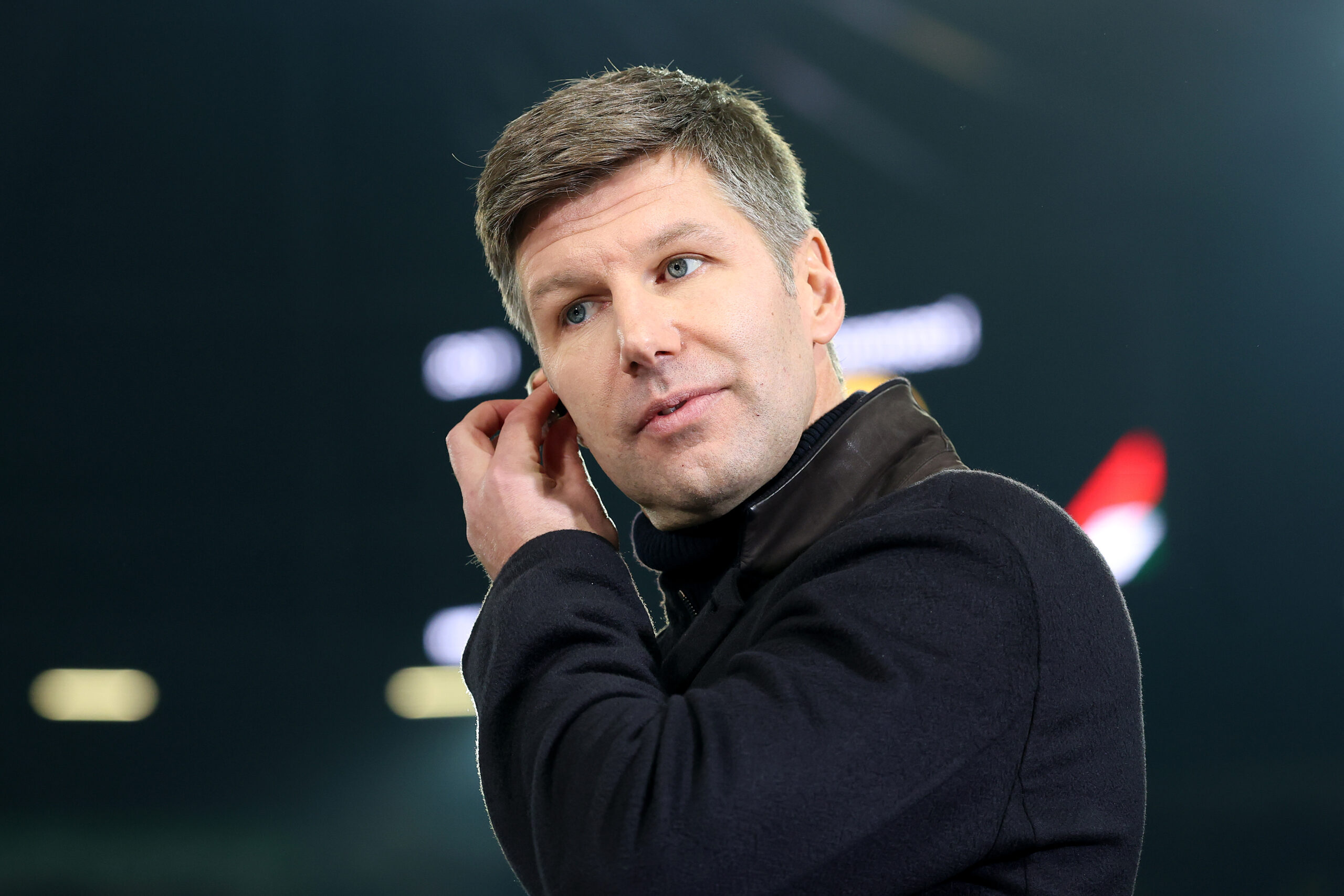
From footballer to sporting director, from CEO to journalist to LGBTQ+ icon, Thomas Hitzlsperger has worn many hats in his career. And even after being out of the game for over a decade, he’s still making a positive difference on and off the pitch.
Born on April 5, 1982, Hitzlsperger developed at Bayern Munich’s academy but left his hometown in 2000, initially trialing with Celtic before joining Aston Villa. After a brief loan spell with Second Division side Chesterfield, Hitzlsperger was then recalled and emerged as a fan favorite thanks to his powerful left-footed strikes, the highlight of which was a last-second 30-yard winner over rivals West Bromwich Albion. ‘Der Hammer’ made the move to Stuttgart in 2005, helping them claim their first Bundesliga title in 15 years and temporarily ending Bayern’s domestic dominance.
“I didn’t use my left foot enough in my first season at Stuttgart: I was only playing with my right foot. And then in the summer break, I realized I should use my left foot, so then we won the league,” stated Hitzlsperger in an exclusive R.Org interview. “All jokes aside, it’s quite difficult to explain. Little things added up, and in the second season we started really well, and the chemistry worked. The new players that came in – we had two Mexican guys, Pável Pardo and Ricardo Osorio, and there are not many Mexican players in the Bundesliga – but both of them immediately had an impact.”
“Suddenly, you have this group of players who really enjoy being together; they have enough talent, and suddenly we stayed in the top group. We benefited from the fact that Bayern Munich didn’t have a great season, but that’s what it takes, and we were there. It was more about team culture, the way we interacted, and we really probably punched above our weight a little bit, but it was a good learning experience for me – how far you can get with really good camaraderie and team spirit.”
Hitzlsperger didn’t just make an impact for the club, but for the country as well, leading Germany to the bronze medal in the 2005 Confederations Cup and the 2006 FIFA World Cup on home soil, before guiding them to a silver medal in the 2008 European Championship. He made the 52nd and final Germany cap of his career in 2010; that same year, he made not one but two transfers, swapping Stuttgart for Lazio before joining West Ham. His contract ended after their relegation, and Hitzlsperger spent the final two seasons of his career at Wolfsburg and Everton. He retired in September 2013, ending his career with 300+ professional appearances across English, German, and Italian football. Four months later, Hitzlsperger became the first high-profile male footballer to come out as gay.
He’s kept himself busy ever since, working as a football expert and commentator for major outlets like Sky Deutschland, ESPN, Fox Sports, The Guardian, and the BBC, and now he’s mainly dedicated to the German public broadcaster ARD (specifically Sportschau), covering major tournaments like the World Cup and European Championships. Hitzlsperger has also worked for several clubs in administrative roles: he served as Head of Sport at Stuttgart and eventually rose to CEO between 2019 and 2022, before becoming a co-owner of Danish club Aalborg via his company Sports Strategy Excellence 22.
“In both the Danish League and with Danish players in general, of course, the ambition is often the same: do well in your own country, and ideally, you end up in the Premier League. This is fine: I think most players around the world want to end up in the Premier League, and that is totally legitimate. In terms of talent development, maybe Norway has done a better job, but I still like the Danish approach. There are always opportunities when you are not a big country; you’re smaller, and fewer people are involved, so changes can happen faster. In Germany, it’s such a big country with a huge federal system. Often, too many people get involved, and when you want to change something, it can take years, whereas in Denmark, they’re more flexible. The Danish FA, the DBU, can change things quicker and adapt.”
“I’m curious to see what happens after they missed out on the World Cup, but it’s clearly a good country for talent. They’re also very good in handball, so team sports are something that really is important to them. Maybe they’re not the number one right now in Scandinavia, but hopefully they’re encouraged to get better again and get back to the top. I like the league; the people have been nice. It’s fair to say that we’ve had our challenges: we’re not at the point where we wanted to be, being in the second division now. You go in with the best ambition to bring young talents into the first team, and of course, eventually you have to sell them. It hasn’t worked out the way we all wanted it. It’s a tough situation, but we must not give up. We’re in this, and we want to make it work, because all the people who are there are so passionate about the club. You go around the world, and football is so important to them, and that’s how it should be. Hopefully, everybody who’s part of Aalborg can do a great job, and in the future, it’s going to be better than it was in the last couple of years.”
Hitzlsperger hasn’t just made a name for himself in German and Danish football, but in Italian football, having joined Hellas Verona’s Board of Directors in January 2025. He isn’t just trying to help Aalborg and Hellas Verona return to the top-flight, but VVV-Venlo, with his consortium acquiring a majority stake in the Dutch club this summer. Moreover, he’s still using his platform to serve as a prominent advocate for LGBTQ+ inclusion in professional football, working as an inspirational speaker and media personality, and appearing in documentaries like TNT Sports’ Rylan: Homophobia, Football & Me to tackle discrimination in sports. Recognized for his positive societal contributions, he has received the Order of Merit of the Federal Republic of Germany, the Julius Hirsch Honorary Award, and has served as an international speaker at events like World Pride.
As football continues its slow, often reluctant march toward full inclusivity, Hitzlsperger occupies a rare, invaluable space. He is living proof that you can reach the summit of the European game, win Bundesliga titles and play in World Cups, while remaining a force for progressive social change long after your boots are hung up. Yet his sharp critique of media sensationalism serves as a necessary reminder: true allyship in sports journalism requires respecting an athlete’s autonomy rather than treating their personal life as a scoop. By balancing tireless advocacy with a fierce defense of privacy, Hitzlsperger continues to shape the culture of the game on his own terms, ensuring that when the next generation of players finally feels safe to step forward, they do so because they are ready, not because the headlines forced their hand.
“I’ve experienced that the biggest push comes from the media, because they always ask, ‘Are football fans interested in players’ private lives? I guess yes and no, but there is such a strong desire from so many people in media to tell that story. For me, it was incredible, because I got a platform. I could speak up, but the desire to break that story and do that documentary about the gay player surprised me, because you almost think this is more of a thing for some people in the media. They want this more than anybody. It’s not about the player or the fans, and suddenly you think, what is this? Why does the media care so much?”
“When I say the media, I know it’s very dangerous, because I don’t mean everybody involved and working in the media, but too many people who’ve reached out to me like, ‘Do you know anybody who’s gay? We should do a documentary, or they should get together, and just let them do what they want to do.’ If they want to speak up, they’ll reach out to you, or somebody else. But it’s almost obsessive, which I find very, very annoying, because you can be sure that a player who is gay, who wants to go public, this person will find a way. But too many want to almost find the player or the players and break that story, which has annoyed me in the past.”
Long after his thunderous left foot stopped terrorizing Premier League goalkeepers, Thomas Hitzlsperger’s most enduring legacy is being forged away from the pitch. By seamlessly transitioning from elite player and CEO to an outspoken advocate for LGBTQ+ inclusion, he has fundamentally altered the landscape of German and European football. But his caution regarding the media’s hunger for a sensational “coming out” story offers a vital ethical framework for sports journalism. It challenges reporters and broadcasters to elevate their coverage: to fight homophobia relentlessly while recognizing that a player’s private life belongs to them, and them alone.