
‘We’re Entering Our Competitive Phase“ AGM Jeff Kealty’s Rise In Nashville And San Jose’s Next Move
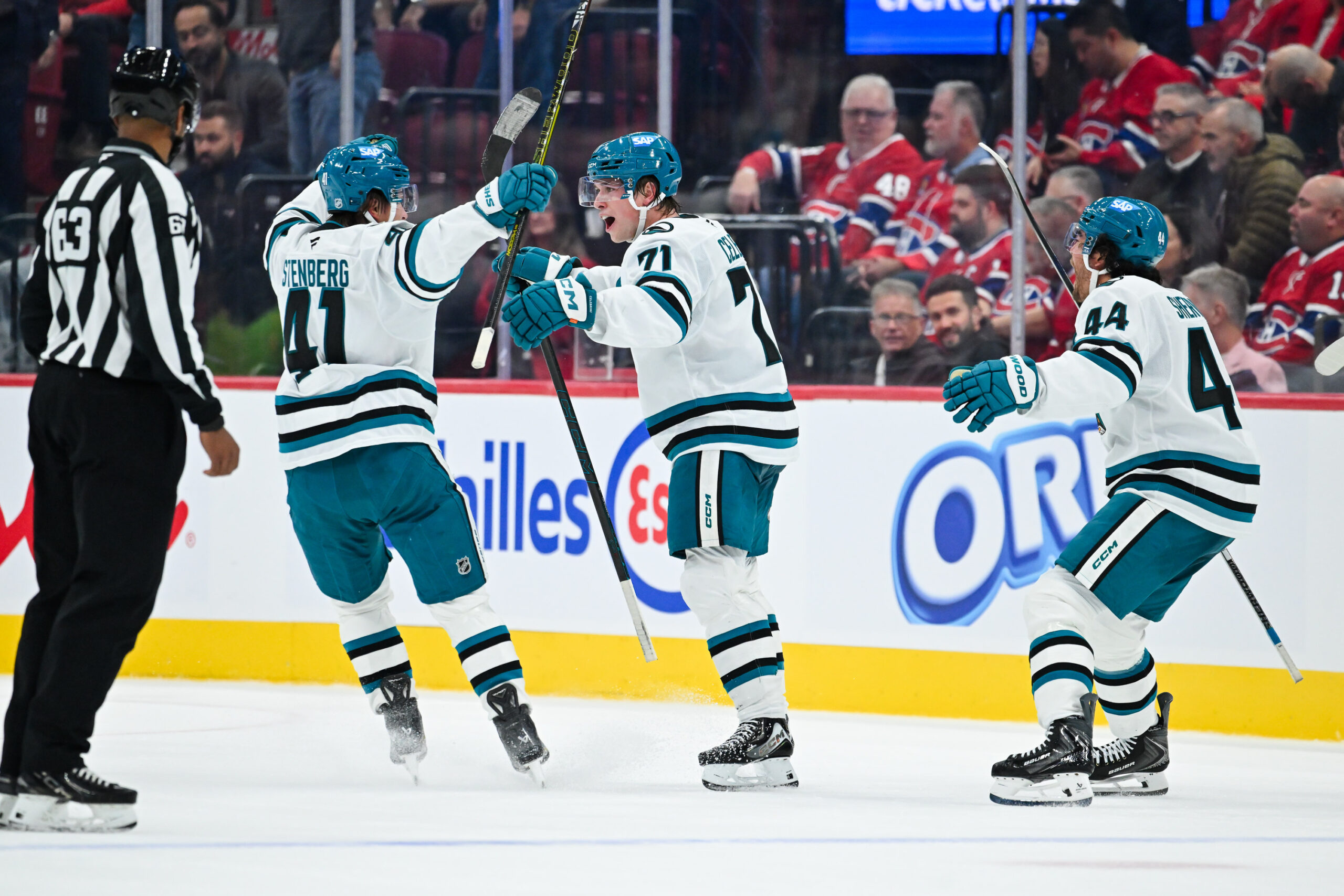
The San Jose Sharks have spent years accumulating the pieces that make a franchise’s next move possible.
They have their elite young center in Macklin Celebrini. Will Smith is growing into the offensive player the organization expected, while Michael Misa and Ivar Stenberg represent another wave of high-end talent. On the blue line, Sam Dickinson, Keaton Verhoeff, Ryan Lin and Haoxi Wang offer the kind of depth most rebuilding teams spend years chasing.
The work now changes.
San Jose is no longer building solely for a distant future. With a deeper prospect pool, a young NHL core and a willingness to add veterans such as Darnell Nurse, Jacob Trouba, Mason Marchment and Kiefer Sherwood, the Sharks are entering the stage where identifying the right established players becomes every bit as important as drafting the next one.
That is where Jeff Kealty comes in.
Kealty joined the Sharks this summer as assistant general manager after spending 25 years with the Nashville Predators. He arrives with a resume built on the amateur side of the business, having worked his way from a part-time scout to chief amateur scout, director of amateur scouting, director of player personnel and assistant general manager in Nashville.
He was behind Nashville’s draft operation for some of the most consequential years in franchise history. He helped oversee the process that brought in Roman Josi, Ryan Ellis, Mattias Ekholm, Juuse Saros, Kevin Fiala and, via trade, Filip Forsberg.
But Kealty’s mandate in San Jose is different.
His focus is more heavily tilted toward pro scouting and pro personnel, putting him in the middle of the next phase of Mike Grier’s plan: deciding when the Sharks are ready to act and which opportunities can help turn a talented young group into a legitimate threat.
Still, having come up from the amateur side of the scouting field can sometimes provide a better overall view of a player’s projection at the pro level.
It’s all perspective.
Learning To Find Value Beyond The First Round
Kealty’s career in hockey operations began in Nashville after an injury ended his playing career early. He had signed with the Predators organization out of Boston University and played his first professional season with Milwaukee before needing to find another way to remain in the game.
Through relationships with then-general manager David Poile and then-director of player personnel Paul Fenton, Kealty got his first opening as a part-time scout.
“I started out as a part-time scout, then a full-time scout, then ran the amateur and assistant GM and running all the scouting,” Kealty said. “I’ve been in the game for over half my life now.”
The appeal of amateur scouting was never the illusion of certainty. It was the challenge of making projections when so much can still change.
“You’re dissecting the players right down to the short hairs,” Kealty said. “But years later, you’ll go back and look at a guy that was taken 20th overall or in the second round or even later that turned out to be game changers. There’s so much value to be had.”
That perspective shaped Nashville’s approach during a stretch that helped establish the Predators as one of the league’s most effective organizations at developing defensemen.
Josi, Ellis and Ekholm were not selected in the first 10 picks. Yet they became the core of Nashville’s blue line for nearly a decade, driving teams that reached the 2017 Stanley Cup Final and won the Presidents’ Trophy in 2018.
The Josi story remains the most illustrative.
Nashville had been tracking the Swiss defenseman for years after seeing him play as an underage player on national teams. The Swiss pipeline was less established at the time, and Josi’s availability entering the second round did not match how highly the Predators’ staff had him rated.
“We had him rated quite highly on our list,” Kealty said. “I want to say probably in our top 15.”
The Predators did not let that gap between their internal ranking and the board make them passive. They began working to trade up on the second day of the 2008 draft.
“We literally went down and tried to make a trade with each team the next day,” Kealty said. “It was 31, 32, and all the way we got to 38. Finally, we were able to make a deal and we got him.”
Josi became a Norris Trophy winner, a franchise captain and one of the league’s premier defensemen. The result was extraordinary, but the process is what Kealty returns to when discussing the draft.
“When you have conviction and you really like a guy, you target him, you try to go get him,” Kealty said. “You’re going to miss plenty, too. There’s a lot of misses. But when you have the conviction and you go after him, I think you always feel pretty good about that.”
Nashville’s success on the blue line was not confined to one profile.
Ellis was an undersized, skilled puck-moving defenseman selected in the first round in 2009. Ekholm was a large Swedish defender who had gone undrafted once before Nashville took him in the fourth round. The organization valued hockey sense, but it also valued patience and the ability to trust area scouts who had spent years following a player.
Ekholm’s development was an example of why a player’s trajectory matters as much as where he stands at 18.
“He just wasn’t ready,” Kealty said. “He went through the draft and he passed through the draft with all the other teams as well. But you rely on your area scouts. In that case, Lucas Bergman, our Swedish scout in Nashville, had done a really good job on Ekholm.”
The underlying lesson was simple. Development does not always arrive according to a team’s schedule.
“There’s no exact science to it as to when somebody is going to hit their stride,” Kealty said. “The job is always to know what you’re looking for, but just be looking for them in all areas.”
From Draft Room To Player Personnel
Kealty’s rise in Nashville came as the scope of the job expanded.
Leading amateur scouting meant running the draft process, but it also meant preparing the organization for decisions that could happen far away from draft weekend. Teams cannot simply study the players they expect to select. They have to know the entire pool well enough to react when a prospect becomes available through trade.
That preparation was particularly important in Nashville’s acquisition of Forsberg from Washington.
The Predators did not own a first-round pick in 2012, when Forsberg was selected 11th overall. But Kealty’s staff had still evaluated him as thoroughly as it would have if Nashville had been on the clock.
When Washington made Forsberg available, Poile and Fenton had access to the amateur department’s complete view of a player it had already identified as a major talent.
“We obviously knew the player really well from doing our work on that draft,” Kealty said. “David and Paul relied on us with the amateur staff to give our input on it.”
Forsberg became another vital piece of Nashville’s best teams. For Kealty, the deal showed why scouting departments have to think beyond their immediate needs and assigned picks.
“There’s years in the draft where you don’t have a pick in the first round or picking in this round, but you’ve got to know all the players,” he said. “You’ve got to do the whole job. It may not be for that day, but it may be for something down the road.”
That philosophy naturally brought Kealty closer to the player-personnel side of the operation. After serving as director of amateur scouting, he spent a year as director of player personnel before becoming assistant general manager when Fenton left for Minnesota.
The AGM title can carry vastly different responsibilities from organization to organization. Some executives center their work on contracts, others on managing the AHL club, analytics or day-to-day cap management. Kealty’s expertise remained in identifying players and understanding how they could fit on a roster.
“My responsibilities have always been largely based around the player personnel aspect,” Kealty said. “I’ve always enjoyed knowing the players, studying the players.”
That background makes the transition to San Jose particularly interesting.
The Pro Scouting Challenge In San Jose
The Sharks hired Kealty in July 2026 to oversee their professional scouting staff, giving him a prominent role in assessing the league as San Jose moves from asset accumulation toward roster refinement.
“In Nashville, I oversaw all the scouting, but I really leaned toward the amateur side,” Kealty said. “Now with my change to the Sharks, it’s more revolved around the pro scouting aspect of things and the pro personnel side of things.”
That shift was not incidental to his decision.
San Jose has already done significant work to stock its system. Celebrini has become the organization’s standard-bearer. Smith, Misa and Stenberg give the Sharks enviable skill down the middle and on the wing, while the organization’s defensive pipeline should eventually give Grier options to develop, keep or trade from a position of strength.
Kealty was direct when asked what made the role appealing.
“We’re going to be entering into our competitive phase here with the team,” he said. “That pro personnel aspect is going to be really crucial to see what additions we can make and really try to push this thing along in the next few years of the competitive window.”
There is a fine line to manage.
The Sharks have reason to be aggressive, and their additions over the last nine months made that clear. Nurse and Trouba bring experience and physicality to the back end. Marchment and Sherwood bring different elements to the forward group. Those moves gave San Jose a tougher, more experienced roster without closing the door on the growth of its young stars.
Kealty saw the value of that blend in the season opener against Florida, a club that remains one of the league’s measuring sticks for competitive edge and playoff readiness.
“Florida is an experienced, rugged team, but there was some pushback from our group,” Kealty said. “I think that was really good to see.”
The challenge moving forward is to distinguish between making a move because it is available and making one because it advances the team’s timeline.
Pro scouting gives Kealty’s department the information needed to make that distinction.
“You try to line up the parent club with the minor league club as well,” Kealty said. “That particular scout, it’s their responsibility to really know the whole organization all the way through.”
That knowledge becomes valuable long before a trade call comes in. It allows a front office to understand why a player might become available, whether his style fills a genuine need and what the other team could reasonably be seeking in return.
“It’s important to be talking to your guys all the time to have a finger on the pulse as to what they’re seeing and what their teams are doing,” Kealty said. “It’s only going to make you more prepared for the next thing that comes your way.”
Kealty spent much of his career helping Nashville find the players who would become part of its future. San Jose has already built much of that base. His new challenge is helping decide which established players can accelerate it.
The Sharks do not have to force the process. Their young core still needs time, and Kealty is quick to note that elite talent does not erase the reality of a player’s age.
“We expect a lot because they’re elite players,” he said. “But they’re still young and they’re still learning all the time. It’s our job to make sure they’re well surrounded.”
Still, San Jose is clearly approaching a different stage. The organization has the prospect capital, the emerging NHL talent and the growing appetite to pursue players who can help now. As those opportunities appear, Kealty’s experience in identifying value, preparing for every possibility and acting with conviction will become increasingly central to what comes next.